
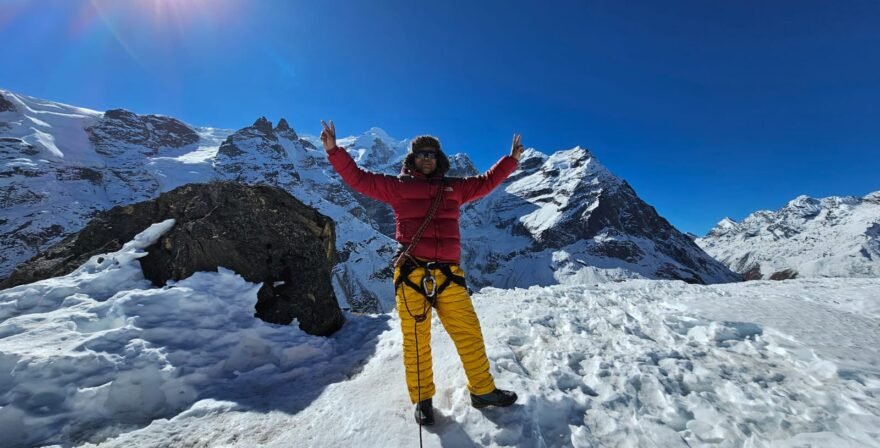
14 Days Mera Peak climbing
Mera Peak Climbing 14 Days is regarded as one of the most fulfilling and easily accessible adventures in Nepal. The nation is renowned for its numerous trekking routes and towering mountains, with Mera Peak, which rises to an impressive height of 6,476 m, being the most favored mountain in Nepal for both novice and seasoned climbers. The Nepal Mountaineering Association categorizes this peak as one of the `trekking peaks` in the country, representing a mountain that offers the excitement of ascending to high altitudes without the extreme technical requirements associated with peaks like Everest and Cho Oyu.
Mera Peak Climbing 14 Days presents an ideal blend of traversing alpine valleys, navigating high-altitude glaciers, and immersing oneself in the Sherpa culture of Nepal, all while standing atop one of the many grand mountains in the Himalayas. The journey is nothing short of remarkable, as it leads through the ablation valley to the summit, providing stunning views of Everest, Makalu, Lhotse, Cho Oyu, and Kanchenjunga.
Why Climb Mera Peak?
Both novices and adventure enthusiasts cherish the experience of climbing Mera Peak and trekking through the Himalayan ranges. No other trekking peak, apart from Mera Peak, can deliver the ideal mix of accessibility, picturesque views, and excitement. Most trekking peaks are significantly more demanding and necessitate years of climbing experience. For Mera Peak, professional guidance is readily available, and basic climbing gear can be utilized, including crampons, ice axes, and climbing ropes.
Throughout a fourteen-day trek, visitors will traverse alpine meadows, terraced hills, and lush forests. Moraines and glaciers are present at the mountain’s base. The summit of the mountain is unique, offering a 360-degree view of the highest peaks globally, ensuring that all the effort invested in the trek is worthwhile. Isolated Sherpa villages and the tranquil Hinku Valley are also part of the trek, providing a distinct cultural experience that sets it apart from many other trekking peaks in Nepal.
Most Special Times for Mera Peak Climbing
To ensure a safe and enjoyable climbing experience, careful consideration must be given to timing. In this regard, the climbing season for Mera Peak is optimal, and Mera Peak Climbing is best recognized during this period.
In spring, the temperatures are significantly more pleasant for hiking, and the skies are typically clear and blue, providing stunning views. Furthermore, this season is when the lower valleys are adorned with beautiful pink and red rhododendron flowers, enhancing the scenic quality of the climb, making it the ideal Mera Peak Climbing Season.
The period from September to November is classified as autumn. This season is excellent for hiking and climbing due to stable weather conditions that offer excellent visibility. It is also the most favored time for expeditions, as the temperatures are mild.
Conversely, the winter months introduce a severe chill and substantial snowfall, which can obstruct paths and routes, rendering them more challenging and hazardous. Additionally, the monsoon season from June to August contributes to this danger with heavy rains that can trigger landslides.
Are newcomers to Mera Peak climbing able to participate?
Yes, provided they are physically prepared as beginners. The climb is deemed non-technical; however, it does require extensive, high-altitude trekking, staying in hanging tent camps, and navigating glaciers.
Mountain guides are trained professionals dedicated to ensuring climber safety and often provide instruction on the use of ice axes, ropes, and crampons to facilitate the climbing process. This support enables even the least experienced climbers to reach the summit safely. To successfully summit, climbers must be mentally prepared and in good physical shape due to the high altitude, cold temperatures, and the need for concentration on the climb.
Regardless of the season, acclimatization is a crucial aspect of the 14-day Mera Peak Climbing experience. An acclimatization schedule is essential to safeguard novice climbers from
An acclimatization schedule serves to safeguard novice climbers against altitude sickness, which can result in various symptoms and significantly diminish climbers’ comfort.
Safety and Acclimatization Sickness:
When climbing and trekking at high altitudes, the risk of altitude sickness is always present, and Mera Peak is no exception. With a peak elevation of 6476 meters, ascending too rapidly can induce sickness in climbers. Common symptoms include:
- Headaches
- Nausea and vomiting
- Dizziness and fatigue
- Shortness of breath
To mitigate these risks during the 14-day Mera Peak climb, climbers are advised to:
Ascend gradually and adhere to the acclimatization schedule
Maintain a nutritious diet and stay well-hydrated
Refrain from consuming alcohol and tobacco during the trek.
Keep track of your symptoms and maintain communication with your guides.
Each day, professional guides on Mera Peak monitor the health of climbers and implement necessary measures to ensure their safety and well-being. In the most severe situations, descending to a lower altitude is the most prudent course of action.
Food and Facilities
Accommodations along the Mera Peak trekking route include both tented camps and teahouses.
Teahouses are basic lodgings situated in the villages along the route. They offer double occupancy rooms with bedding, and meals, including warm dishes during winter, are available for a nominal fee.
Tented Camps are positioned adjacent to the Mera Base Camp and High Camp. These camps are operated by the climbing team and provide sleeping and dining tents.
The menu throughout the climb is straightforward and calorie-dense to support the trek. Typical meals consist of dal bhat, various noodles, and other soups. Fried rice with optional eggs is also served. It is essential to ensure access to safe drinking water, as altitude sickness is more prevalent at higher camps, and boiling or filtering water is strongly advised.
Reaching Mera Peak begins with a flight to Lukla from the capital, Kathmandu. This flight is renowned for being one of the most scenic and thrilling experiences.
To ascend Mera Peak, it is necessary to obtain the following government permissions:
– Mera Peak climbing permit
– Makalu Barun National Park Entry Permit
– Local Government Permit from Khumbu Pasang Lhamu Rural Municipality.
Most trekking companies handle these permits in advance, simplifying the process for climbers preparation and training successfully reaching Mera Peak within 14 days necessitates a certain level of mental and physical readiness. To achieve this, climbers should:
– Engage in cardiovascular activities, particularly running, biking, or stair climbing.
– Perform exercises to enhance leg and core strength, such as hiking, squats, lunges, and various core workouts.
– Undertake practice walks of extended duration while carrying a loaded backpack to mimic hiking conditions.
– Prepare for long days of hiking, high-altitude environments, and adverse weather, all of which require a significant degree of mental resilience.
By following these guidelines, climbers increase their chances of having a positive experience and successfully reaching the summit.
The Facts About Climbing Mera Peak:
Climbers are afforded a unique opportunity to engage with new experiences, appreciate nature, and immerse themselves in a different culture:
– Scenic wonders: Breathtaking views of lush greenery, diverse forests and rivers, and expansive meadows adorned with glaciers.
– Sherpas: The small villages encountered along the way illustrate and narrate the lifestyle of the Sherpas in Nepal.
– Long and steep climbs: Prepare for high-altitude trekking weekends characterized by lengthy climbing days and steep ascents; this is essential for tackling the long and steep climbs.
– Summit experience: The pinnacle of climbing Mera Peak over 14 days is the chance to relish the stunning vistas of the majestic Himalayas from the summit.
This blend of challenge and reward is what renders Mera Peak an exceptional destination for all trekkers.
Costs and Budgets
The expenses associated with a 14-day Mera Peak climbing expedition vary based on the services provided, the agency selected, and individual costs. Essential components include:
– Climbing guides and porters
– Accommodation in tents and teahouses
– Meals offered along the trail, at the Base/High Camp
– Domestic flights within Nepal – from Kathmandu to the starting point of the trek.
Additional offerings encompass snacks, drinks, Wi-Fi, gratuities, equipment rental, and powered charging (if accessible), along with optional tours in Kathmandu and Wi-Fi services in Kathmandu. Reasonable estimates indicate that the cost for guided Mera Peak climbing ranges from $2500 to $3500 per person, contingent upon the season and the included services.
Equipment and Connectivity
Charging: The teahouses leading up to Khare provide charging options for a nominal fee. However, Base Camp and High Camp typically lack charging facilities for phones, so we advise bringing power banks or solar chargers.
Internet and Mobile: Throughout the journey, mobile network connectivity is limited (NCELL/Nepal Telecom). While some tea houses offer Wi-Fi, the majority of locations at higher altitudes do not in summary.
Mera Peak Climbing over a span of 14 days represents the pinnacle of experiences in the Himalayas for both novice and experienced trekkers. Without the extreme dangers associated with larger mountains, climbers can engage in high-altitude mountaineering. Furthermore, they benefit from expert guidance and can enjoy breathtaking views.
The expedition will feature challenging treks, diverse cultural encounters, and stunning landscapes. The ultimate highlight is the summit, which provides trekkers with a view of the tallest mountains on the planet. It is a once-in-a-lifetime experience, whether one is pursuing a personal achievement, embarking on an epic adventure, or simply wishing to witness the splendor of the Himalayas during the 14 Days Mera Peak climbing.